hello Reticulum
Homemade Computer Club #04: What is a Network?
a workshop report
This fanzine attempts to give an introduction to the networking stack of Reticulum, whilst documenting the events that took place at Varia, Rotterdam for “Homemade Computer Club #04: What is a Network?”.
This updated version attempts to improve on the first edition by improving readability and printability.
Reticulum
The Reticulum Network is a very clear jump in networking infrastructure over the internet. Whilst the world has become more uncertain, our communication infrastructure has only become more centralised. Even if we choose to use “better” alternatives to WhatsApp, Instagram, etc., we are still always completely reliant on the one underlying network, i.e. “The Internet”. With the push of a button, “The Internet” may all of a sudden become unavailable. In places with oppressive regimes, this has not been uncommon. In the current political climate, it would not be surprising if any political system all of a sudden became repressive.
Reticulum can be seen as an antidote to the current affairs.
Reticulum is a network stack developed by markqvist. It can be seen as a toolbox for building our own network, where a lot of equipment that is already in our drawers can be used to build the network. Both on the hardware and content level, the network is in our control and in the hands of the users.
What makes Reticulum different from mesh-networks such as Meshtastic and Mechcore, is that it makes use of various radio communications from different hardware. Protocols such as WiFi, Bluetooth and Lora can be used freely to communicate with each other.
Reticulum also offers encryption on a fundamental level, whereas internet communication often only has encryption strapped on top.
Reticulum is already being used across the world for various communication goals. In this zine we have compiled such cases of Reticulum being used, how to use it yourself and documenting our discoveries.
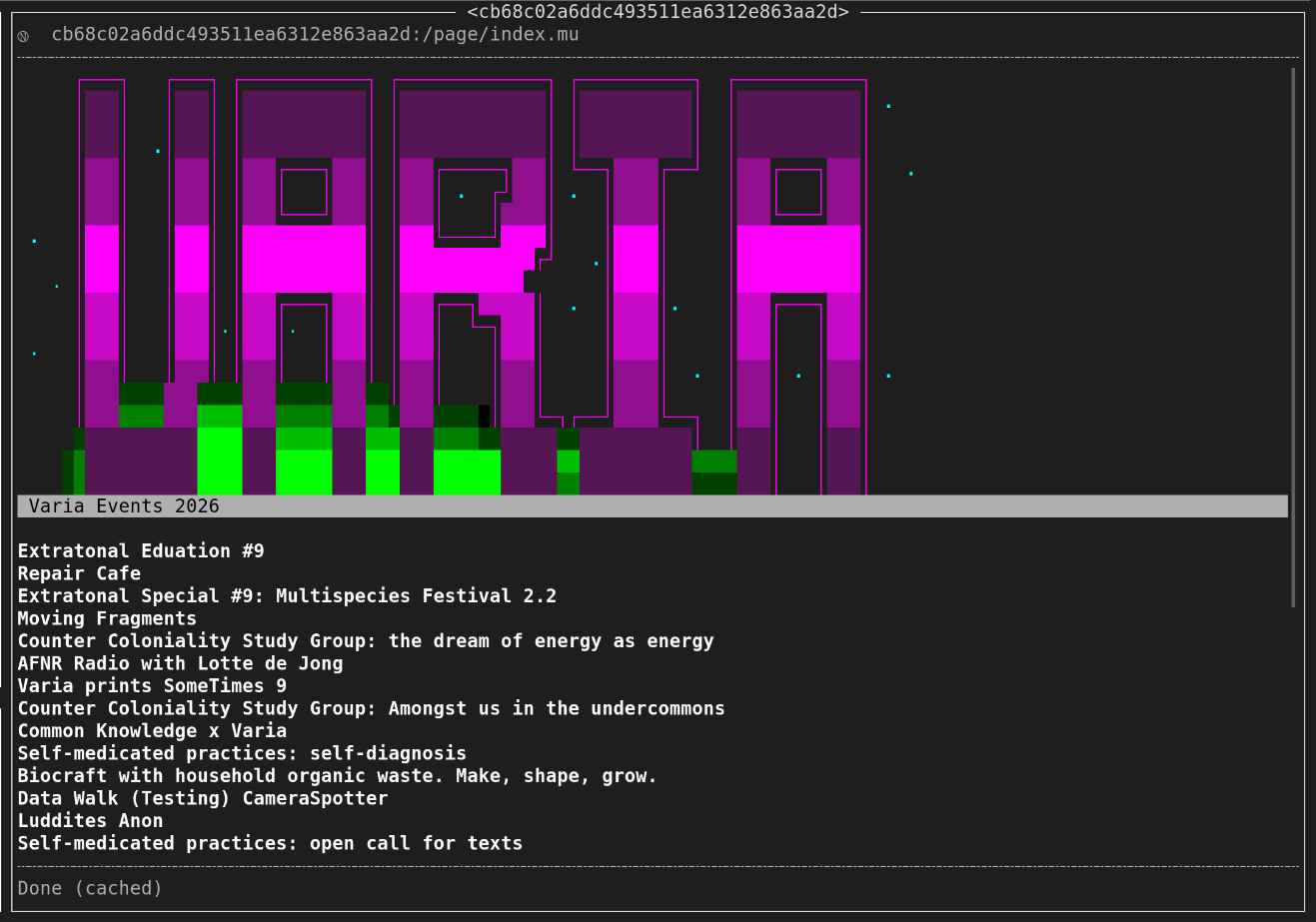
How to install Nomadnet on Linux or Mac
Open the Terminal
with pipx (recommended)
pipx install nomadnetwith venv
mkdir reticulum
cd reticulum
python3 -m venv .venv
. .venv/bin/activate pip install nomadnet
how to use Nomadnet:
Open Nomadnet by running nomadnet in the terminal
Go to the network tab on the top, either by clicking or navigating with keyboard
Press ctrl + l to receive announce stream
Change your name (optionally) and select announce now
In network tab there are two sub-tabs: peers (the individual devices) and nodes (the pages) >> To start a conversation: click on a person (under ‘peers’) and select ‘converse’
Trust the person before you start sending a message: type your message and press control + d to send
In the conversations tab on the top, you can find all your conversations
in an open conversation you can see how many hops a message made
It is possible to blacklist or whitelist peers and nodes. You can either use a blacklist to filter out the bad apples, or you can work with a whitelist to build a closed off network for your trusted community.
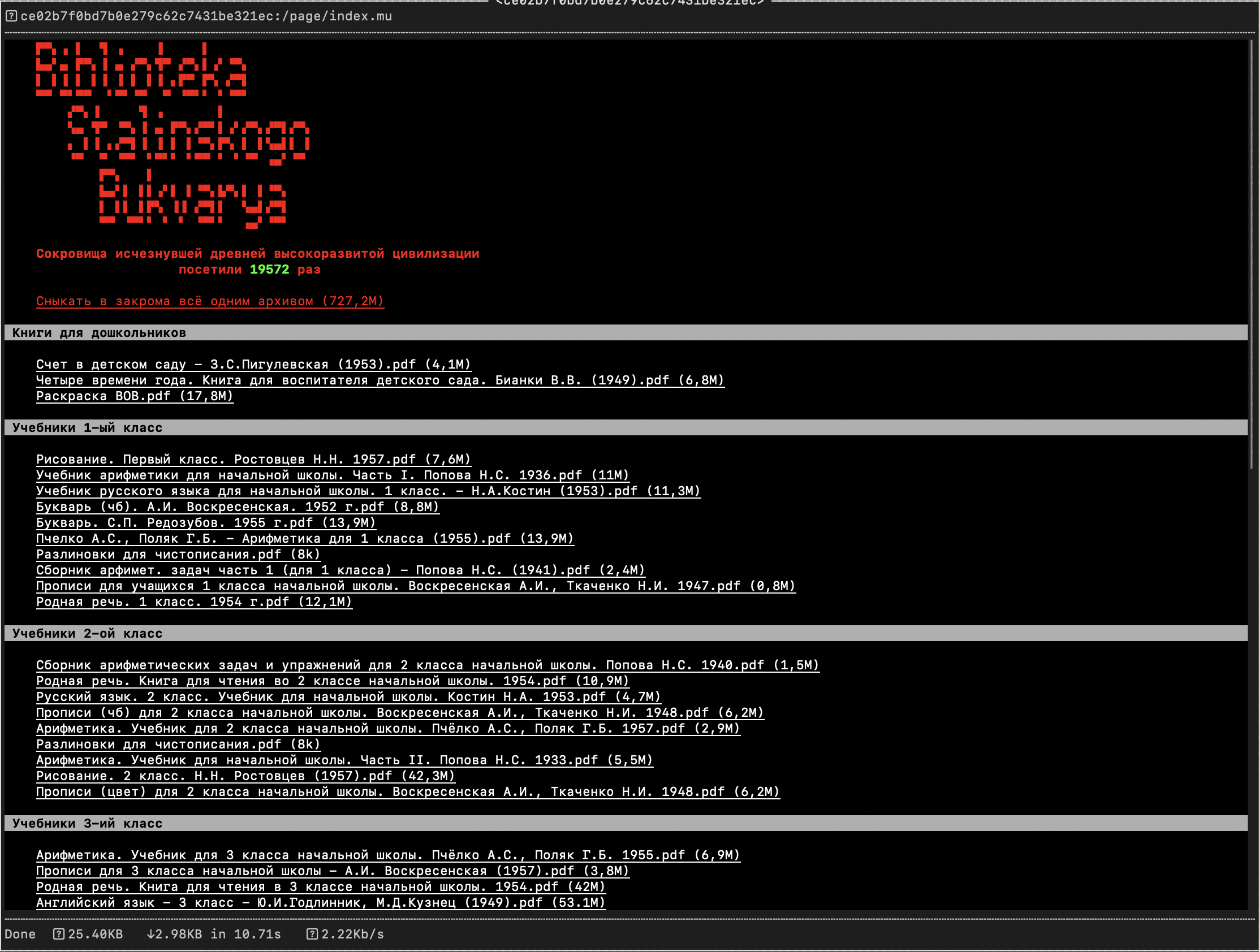
Make your own node (page)
the node pages are written in the micron markup language you can find more detailed documentation about micron and other in the nomadnet applications top bar under [Guide] in a few simple steps, this is how you can set up your own page: in your terminal window enter cd ~/.nomadnetwork/storage/pages to move into the pages directory once there, make and open new file that is named index.mu using for example nano: nano index.mu edit the file, fill in content that should be visible on the page save the file go back to the nomadnetwork root and open the config file in the config file scroll down to [node] underneath, change the setting enable_node to yes or true back to the nomadnet application (you might need to restart it) your node should be visible now
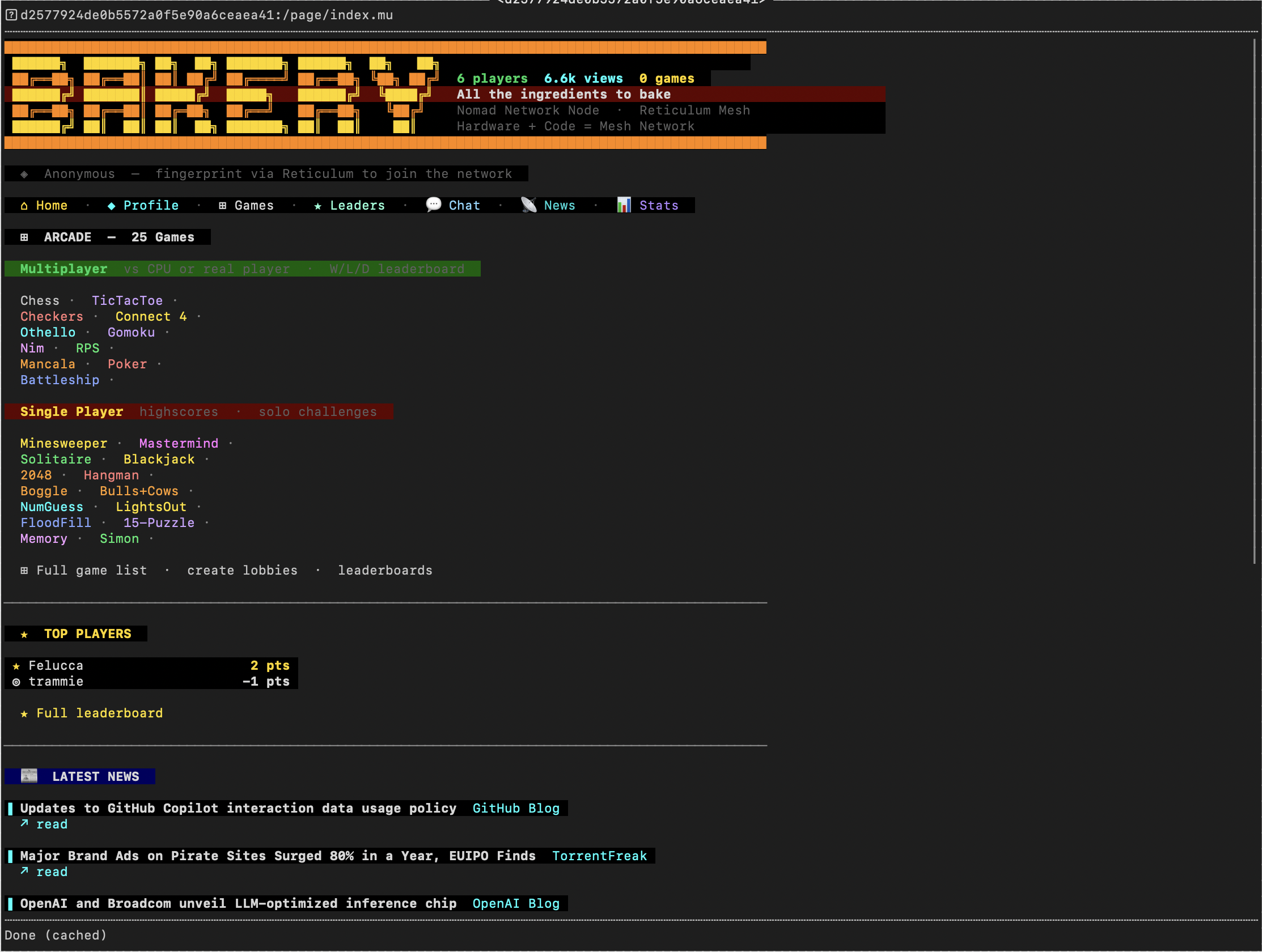
how to host a node
you can use your own laptop but then the node will be unavailable once your computer is turned off. Otherwise use an old computer or rasperry pi which can be powered on more reliably.
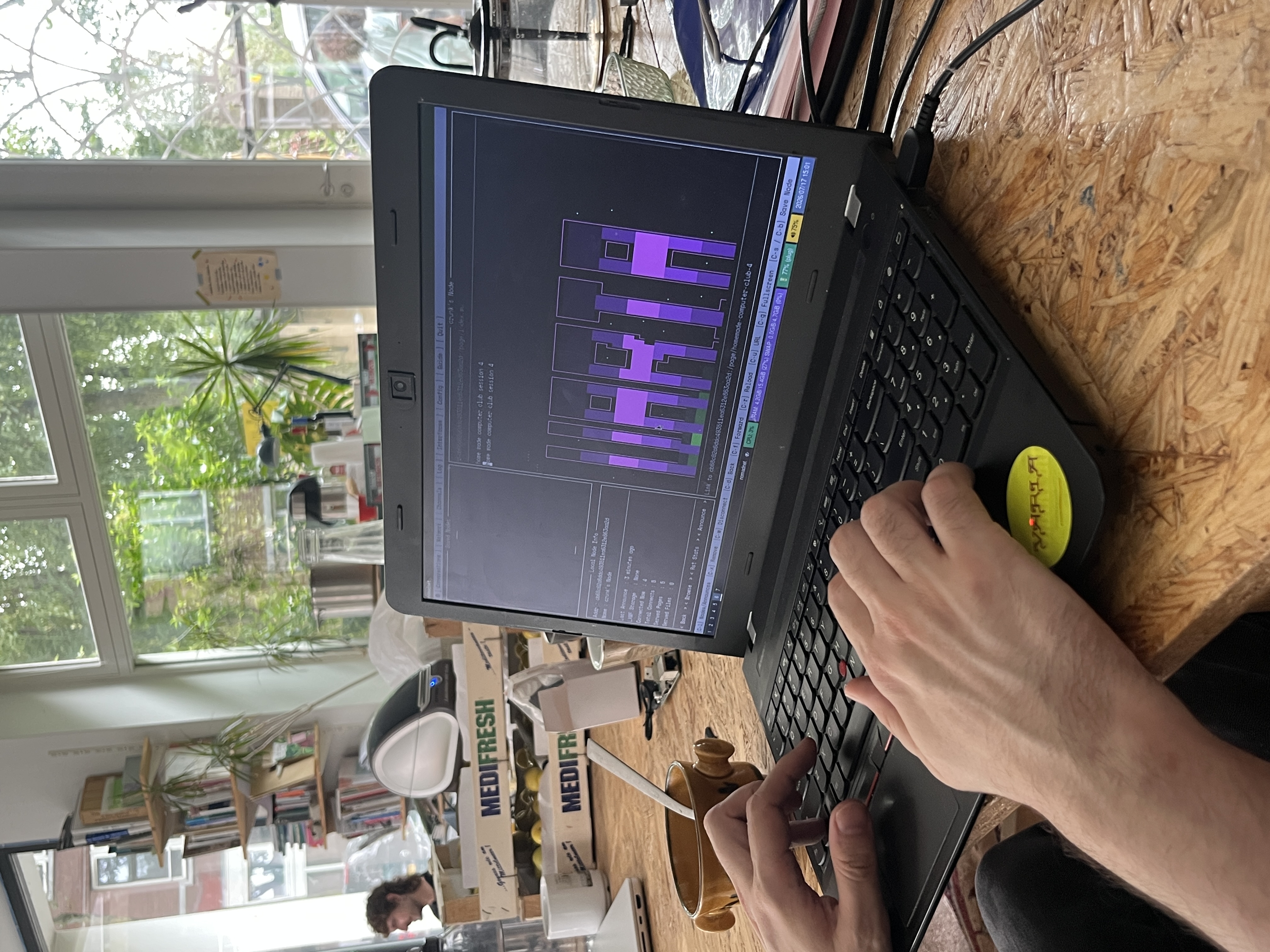
MAPPING THE NODE POSSIBILITIES
autoconfiguring routing over heterogeneous carriers
Before defining the location of our nodes we took a moment to understand their functionality in order to plan our network accordingly. While the commonality between any link is that it must be physical, we discussed about the differences of electromagnetic telecommuication and cabled links, highlighting some peculiarity of each…
For communication to take place between two parties, there has to be something that connects them, something between them through which a message can pass through. That has a physical and logical component: for example, WiFi uses radio waves on 2.4GHz, in the form of energy emitted into the electro-magnetic spectrum – but also a set of rules about how encode the data into measurable differences in the radio wave. The physical component should reach to both parties. For example, when speaking, conversation partners should hear each other, or when establishing a radio links, the radio and antenna should be within the range of each other. That is only a necessary but not a sufficient condition, though. Speakers should have a mutual understanding of rules they use to make small changes in the sounds they emit, such as using the same language. Similarly, radio transceivers should use the same encoding schemes and other rules to vary the radio waves depending on the information to be transmitted over the channel. So a combination of sound and language; or a combination of frequency and protocol is what we call a carrier or medium. Reticulum can run over many such carriers, and each other them have their own advantages and limitations: WiFi does not need a cable, Ethernet cable (extends to a maximum of 305 meters), fiber optics cable (that can stretch for kilometers), LoRa (that goes a bit further than WiFi but is way slower), etc.
Fiber optics cables provide a faster and harder-to-track data transmission, as they send packets as light through their connection line. They can connect 2 — or more through the use of a switch — computers directly. WiFi access points are defined as such due to the role these devices can play in a network and their main role is to extend network connectivity further with radio waves. Generally a router has a routing table to help find the destination of messages and data packets and in a way, this functionality works similarly to the switch box in ethernet connections. Furthermore, these devices are often powered over Ethernet (PoE): they’re fed through the same network cable that is used for communication, but in this case it is attached to electricity, so the device only needs one cable.
There are also other ways in which a data transmission can happen, and they extend the logic of what defines a link, for instance when reticulum cannot reach a destination, you can set a “post office” node: a spot to store and forward the data. For instance, the metro line would be great for this, they don’t seem to change the carriages a lot, so the node would predictably appear at the same locations at the same times.
The conversation switched even towards the possibility of bike messengers and this led to a crucial insight: anything that can run the program implementing the Reticulum protocol can be used to become a node in the network, e.g. a phone, a cable, a router, the local wifi of Varia, QR codes and other forms of offline delivery. This is what differentiates Reticulum from other communication systems such as the telephone networks: Reticulum adapts the infrastructure that already exists through a data-transmission program. KPN and other telecom providers/companies/services do not have to think about the existing habitats or infrastructures of the city. For example if KPN wants to install a new electrical switchbox, they can build one in the street wherever they please. Not only do they have ownership over the connections and frequencies they are also partial landlords of the city. Reticulum pays attention to its electromagnetic and otherwise surroundings because it is important for inhabitants of the city. Just like trees, shrubs, weeds on the street or in the parks, the networks of communications are a part of our environment. Just like the other goods in our immediate organic environment electronics can be harvested and foraged safely as well. To forage safely, we would have to know what fruits, nuts and vegetables, cables, networks, electronics are safe to forage and which are dangerous to harvest. Some electronics can be foraged easily and some are more tricky. Consult friends and observers of internet of things for detailed information :->
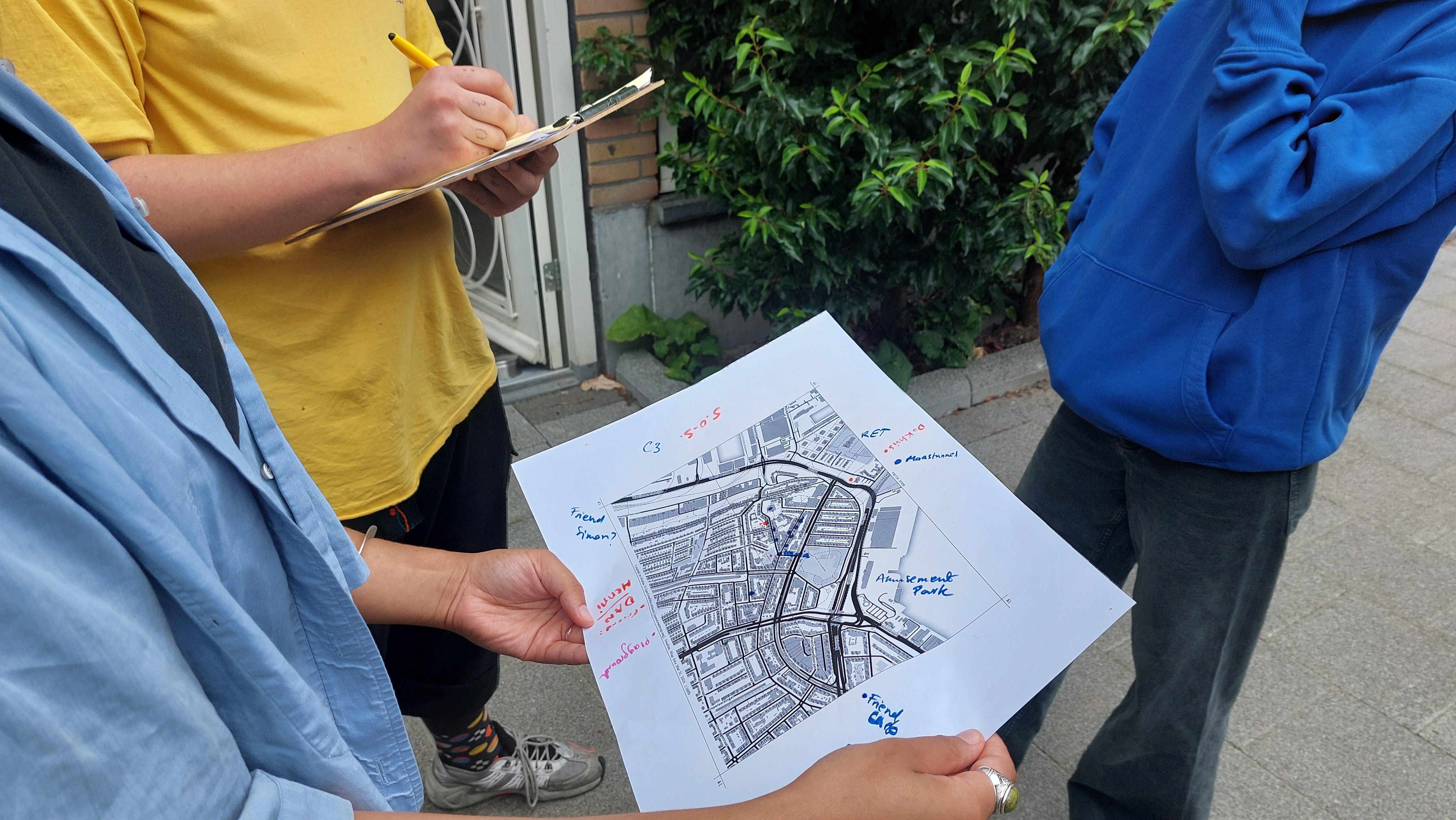
After discussing infrastructures around us, we decided to map our neighborhood to see what are our locational connections, where can we trust with a node? We started by printing out a map and pointing out a possible Reticulum network. From here we discussed possible purposes for our network and the way the various transmission devices we discussed could align with that according to distances between locations and the limits of the network devices we had in hand.
First we located high points that could provide links in line of sights between WiFi directional anntennae, such as a restaurant with an elevator in its architecture that could provide a vertically-moving access points, or — aligning with the experience of Freifunk in Germany — the top of cathedrals seemed like a possible option.
A second phase moved towards locating known people houses (friends places, flats of other Varia members) around the area, so we mapped friends around Varia space and sorrounding neighborhoods, and started thinking of which links we could make. This led to our first attempt with cabled connection in Gouwstraat, we tried to calculate the distance between Varia and the window of the closest friend, to test out what is possible with a long ethernet cable.
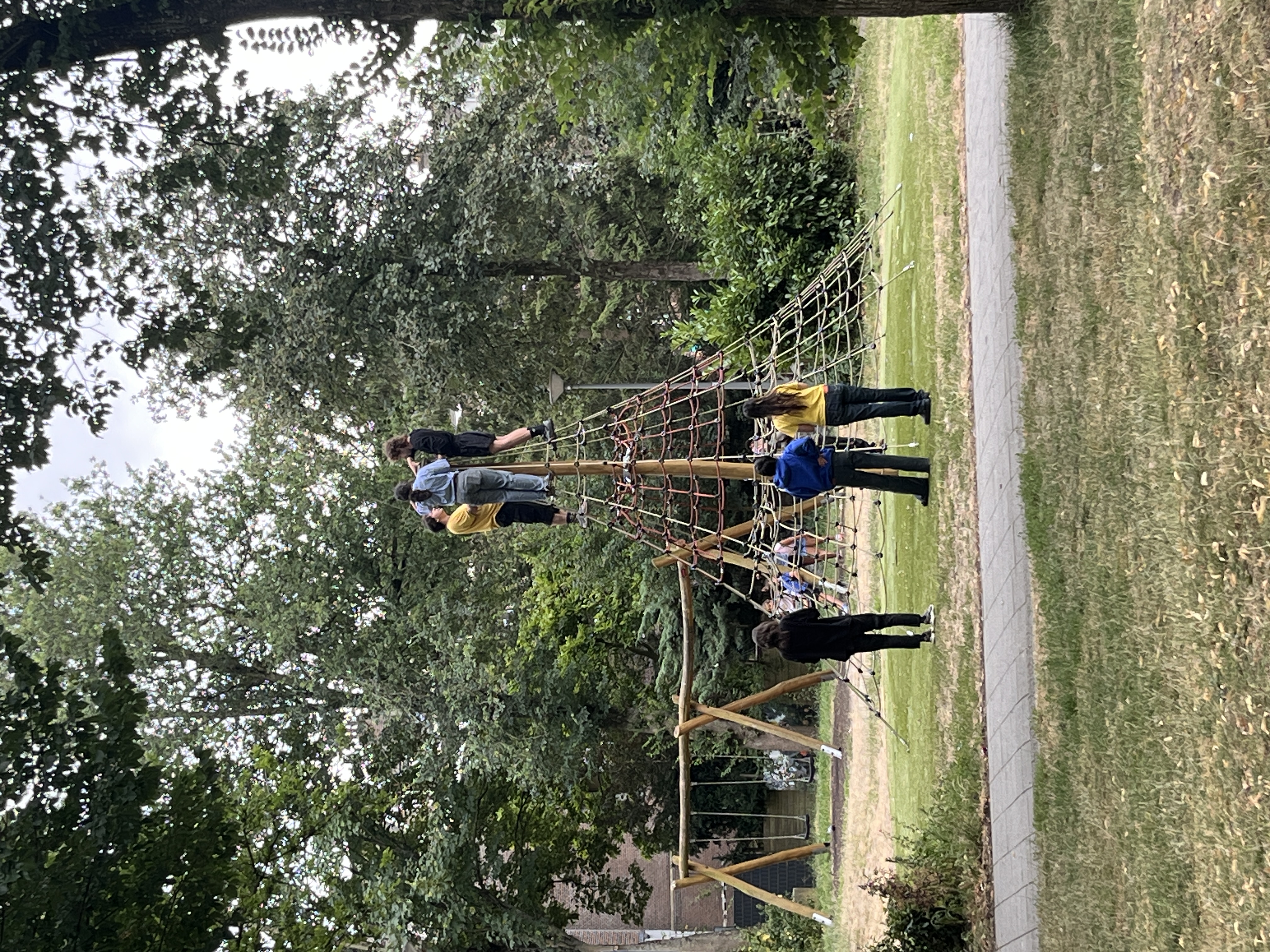
Afterwards we moved to the nearest park, here we checked the area and in the playground we started climbing the web rope structure to reach its top and we realized that it would’ve been a perfect spot for a solar-powered LoRa node. Around the same structure some light poles attracted us as, after an analysis we discovered that they were solar-powered, which made our idea of using an autonomus reticulum node more tangible.
Around there we discovered some infrastructure enclosures — maybe KPN fiber-optics box or the neighbourhood electricity box — we also thought that hiding a small reticulum device either around or inside these enclosure could not only be an interesting option but also a political statement for technological reclamation. Which led us back to the starting of our beginning conversation, the idea of a reticulum network, and generally the one of alternative netowrks, is exactly to generate together an infrastructure that could work pubblicly and that differs from private iteration of networked systems by being actually designed by who is part of the network itself.
The Zen of Reticulum
Below some very small snippets of the longer Zen of Reticulum, the philosohies that the networking protocol has been built upon:
For the better part of a generation, we have been taught to visualize the digital world through the lens of hierarchy. The mental maps we carry are dominated by a single, misleading image: The Cloud.
We imagine the network as a vast, ethereal space “up there” or “out there”. A centralized repository of services and data to which we, the lowly clients, must connect. We build our software with this assumption hardcoded into our logic: There is a server. The server has the authority. The server knows the way. I must find the server to function.
This is the Client-Server mental model, and it is the primary obstacle to understanding Reticulum.
In Reticulum, you must shift your thinking from “connecting to” to “being among”. Reticulum is not a service you subscribe to - it is a fabric you inhabit. There is no “up there”. There is only here and there, and the space between them is peer-to-peer.
…
Scarcity also teaches us about time. We have become addicted to the synchronous now - the instant ping, the real-time stream. But Reticulum embraces asynchronous time.
When links are intermittent and latency is measured in minutes or hours, “real-time” is an illusion. Reticulum doesn’t encourage Store and Forward as a mere fallback, but as a primary mode of existence. You write a message, it propagates when it can, and it arrives when it arrives.
This changes the psychological texture of communication. It removes the anxiety of the immediate response. It allows for contemplation. You are not demanding the recipient’s attention right now; you are placing a gift in their path, to be found when they are ready.
By designing for delay, you design for resilience. You are no longer building a house of cards that collapses when a single packet drops. You are building a stone arch that distributes the load over time.
Joining the cause
We are organising all of our events on our radar squat group.
We are consistently meeting in Rotterdam and Utrecht, and have workshops dotted throughout the Benelux!
radar.squat.net/en/reticulum-low-countries
Resources:
Resources shared with eachother during the workshop:
Fanzine on active RDIF and boat detection system hacking: https://cloud.puscii.nl/index.php/s/XwxTCeYQYB8K8QW
Talk on Reticulum: https://media.ccc.de/v/38c3-reticulum-unstoppable-networks-for-the-people